Asia Market Wrap - Asian Stocks Largely Flat
Asian stock markets bounced back after a selloff on Monday, which was led by sharp drops in risky assets worldwide, including cryptocurrencies.
The main MSCI regional stock index climbed as much as 0.5% before pulling back slightly. Markets that rely heavily on technology, such as South Korea and Taiwan, performed well.
However, Japan's Nikkei stock index ended Tuesday virtually flat, trading quietly after a 1.9% tumble on Monday that pushed it below the key 50,000 level. The biggest positive mover for the Nikkei index on Tuesday was Fast Retailing (the owner of Uniqlo), whose 1.8% rise contributed significantly to the index's value due to its large size. Conversely, the biggest drag on the Nikkei was the startup investor SoftBank Group, a major local beneficiary of the AI boom, which tumbled 5.2%.
Overall, the Nikkei was almost evenly split, with 112 stocks rising and 111 falling.
The broader Topix index also added a negligible amount, less than 0.1%, recovering slightly from its 1.2% slide the day before.
Euro Area Inflation Edges Higher
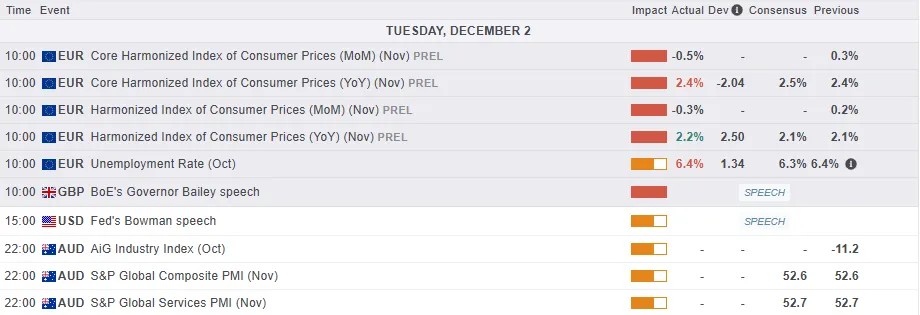
Inflation in the Euro area rose slightly in November 2025, hitting 2.2%, up from 2.1% in October, and slightly higher than experts expected.
The price increases for services sped up to 3.5%, the highest rate since April, and energy prices fell more slowly than before. Prices for factory-made goods and for food, alcohol, and tobacco remained unchanged. When you strip out the volatile items like energy and food (Core Inflation), the rate held steady at 2.4%.
Among the biggest European economies, Germany’s inflation rate jumped to 2.6%, the highest it has been since February and now above the European Central Bank's (ECB) 2% target. In contrast, inflation slowed down slightly in Spain (to 3.1%) and dropped more significantly in the Netherlands (to 2.6%).
Meanwhile, inflation in both France (0.8%) and Italy (1.1%) remained well below the ECB's target.
European Session - European Stocks Eye Recovery
European stock markets experienced a drop on Tuesday, continuing the minor declines from the previous day. The main European index, the STOXX 600, was down 0.1%.
However, major country stock exchanges like those in Germany and France were both up slightly, gaining about 0.1% each. Healthcare stocks were the biggest reason for the overall decline, falling 0.3% due to losses in large companies like AstraZeneca and Novo Nordisk.
Despite this, the sector's losses were contained because the German pharmaceutical firm Bayer surged by about 15%. This jump happened after the U.S. government, led by President Donald Trump's administration, encouraged the Supreme Court to hear Bayer's appeal to stop thousands of lawsuits related to its Roundup weed-killer supposedly causing cancer.
Meanwhile, other sectors like consumer discretionary stocks (including luxury goods and car companies) also traded lower. In other news, the market is monitoring a scheduled meeting between President Trump's special envoy, Steve Witkoff, and his son-in-law Jared Kushner with Russian President Vladimir Putin to discuss a potential ceasefire in Ukraine.
Among individual stocks, FDJ United shares fell 4.2% after J.P. Morgan lowered its rating on the lottery and online game operator. Finally, investors are now looking ahead to the release of preliminary inflation data for the euro zone later today.
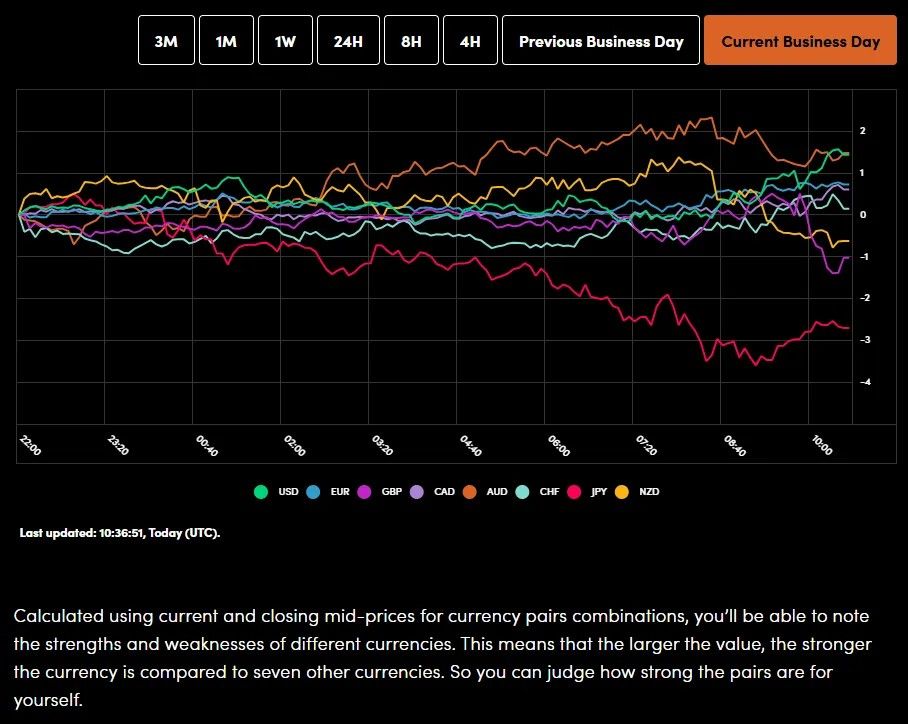
On the FX front, the US dollar remained steady on Tuesday, helped by a successful sale of Japanese government debt that reassured investors after a selloff in bonds globally earlier in the week. The dollar went up 0.1% against the Japanese yen, reaching 155.72, after a strong auction of 10-year Japanese government bonds stabilized the bond market.
The overall US dollar index, which measures its strength against other major currencies, saw minor ups and downs but was last trading slightly higher at 99.441, ending a seven-day losing streak.
The euro was holding steady at $1.1610 as peace talks regarding the war in Ukraine continued; European leaders showed strong support for Ukrainian President Volodymyr Zelenskiy, particularly after a previous US-supported peace plan seemed to favor Russia, while a US special envoy traveled to Moscow for more discussions.
The British pound was 0.1% stronger at $1.3217, remaining near its highest level in a month, despite the head of Britain's fiscal watchdog resigning after his agency accidentally released details of the government's budget before the Finance Minister announced them.
Finally, the Australian dollar gained 0.2% to 0.6553, and the New Zealand dollar (kiwi) was steady at 0.57264.
Currency Power Balance
Oil prices remained mostly stable on Tuesday. Traders were assessing two main risks: the first was the ongoing threat from Ukrainian drone attacks on Russian energy facilities, and the second was the increasing tension between the US and Venezuela.
Specifically, Brent crude futures dipped slightly by 19 cents (0.3%) to trade at 62.98 a barrel.
The current price of spot gold dropped by 0.9% to $4,191.79/oz.
This decline was primarily driven by two factors: the first was the increase in US Treasury yields, which makes holding gold (which does not provide interest) less appealing to investors; and the second was profit-taking by traders who decided to sell their gold after the price had reached a six-week high in the previous trading session.
Economic Calendar and Final Thoughts
The European session will be quiet today with a lack of high impact data releases.
The US session will also be a quiet one with very little in terms of data.
Chart of the Day - FTSE Index
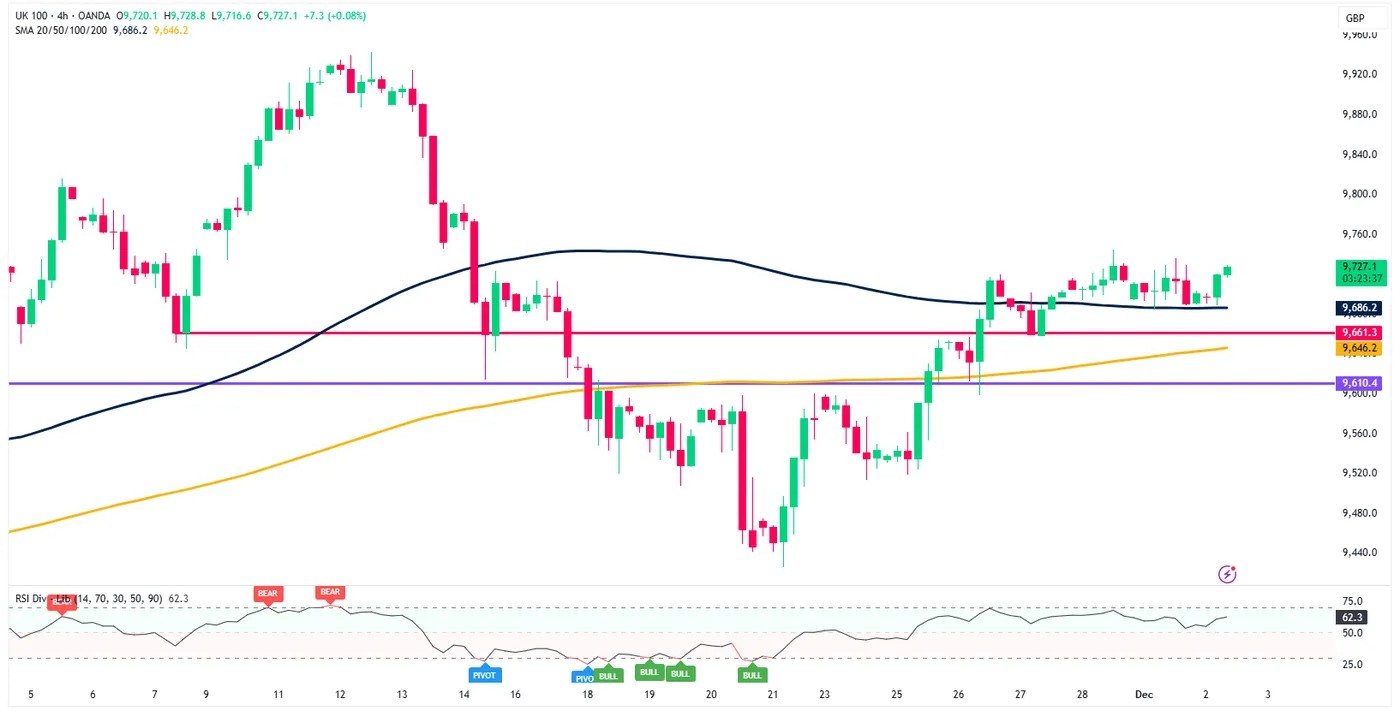
From a technical standpoint, the FTSE 100 has held above the 100-day MA since Thursday afternoon.
This could be seen as a sign of bullish momentum with a potential breakout coming soon.
However, the longer price remains rangebound, this will increase investor angst and a potential pullback may materialize.
For now though, a bullish move appears more favorable as markets enter the final month of 2025.
Immediate support rests at 9686, 9661 and 9646 respectively.
A move higher may encounter some resistance at 9750, 9800 and 9850.
FTSE 100 Index Daily Chart, December 2, 2025
Source: marketpulse