XAUUSD
4017.89

1.05%

WTI
81.733

3.63%

EURUSD
1.14365

0.05%

GBPUSD
1.34504

0.21%

USDJPY
162.376

0.01%

USNDAQ100
28607.10

1.39%

Global Markets

Economic Calendar
7x24
Quotes

Video

Latest Update

Risk Warning on Trading HK Stocks

Despite Hong Kong's robust legal and regulatory framework, its stock market still faces unique risks and challenges, such as currency fluctuations due to the Hong Kong dollar's peg to the US dollar and the impact of mainland China's policy changes and economic conditions on Hong Kong stocks.

HK Stock Trading Fees and Taxation

Trading costs in the Hong Kong stock market include transaction fees, stamp duty, settlement charges, and currency conversion fees for foreign investors. Additionally, taxes may apply based on local regulations.

HK Non-Essential Consumer Goods Industry

The Hong Kong stock market encompasses non-essential consumption sectors like automotive, education, tourism, catering, and apparel. Of the 643 listed companies, 35% are mainland Chinese, making up 65% of the total market capitalization. Thus, it's heavily influenced by the Chinese economy.

HK Real Estate Industry

In recent years, the real estate and construction sector's share in the Hong Kong stock index has notably decreased. Nevertheless, as of 2022, it retains around 10% market share, covering real estate development, construction engineering, investment, and property management.

Analysis
Data

Data Warehouse Market Trend Institutional Data Policy Rates Macro

Market Trend

Speculative Sentiment Orders and Positions Correlation

Popular Indicators

Pro
AI Signal

Trading Signals

AI Signal

News
Recent Searches
    Trending Searches
      News
      7x24
      Quotes
      Economic Calendar
      Video
      Data
      • Names
      • Latest
      • Prev.

      View All

      No data

      Sign in

      Sign up

      --

      • My Favorites
      • My Subscription
      • Profile
      • Orders
      • Account Settings
      • Sign out
      Reminder Settings
      • Economic Calendar
      • Quotes/Market Quotes

      Reminders Temporarily Unavailable

      FastBull Membership Privileges
      Quick Access to 7x24
      Quick Access to More Editor-selected Real-time News
      Real-time Quotes
      View more faster market quotes
      Upgrade to {0} Pro
      I have read and agreed to the
      Pro Policy
      Feedback
      0 /250
      0/4
      Contact Information
      Submit

      Geopolitical Risk Premium Returns to More Rational Levels, Oil Prices Likely to Maintain a Constructive Trading Bias in H2

      Summary:

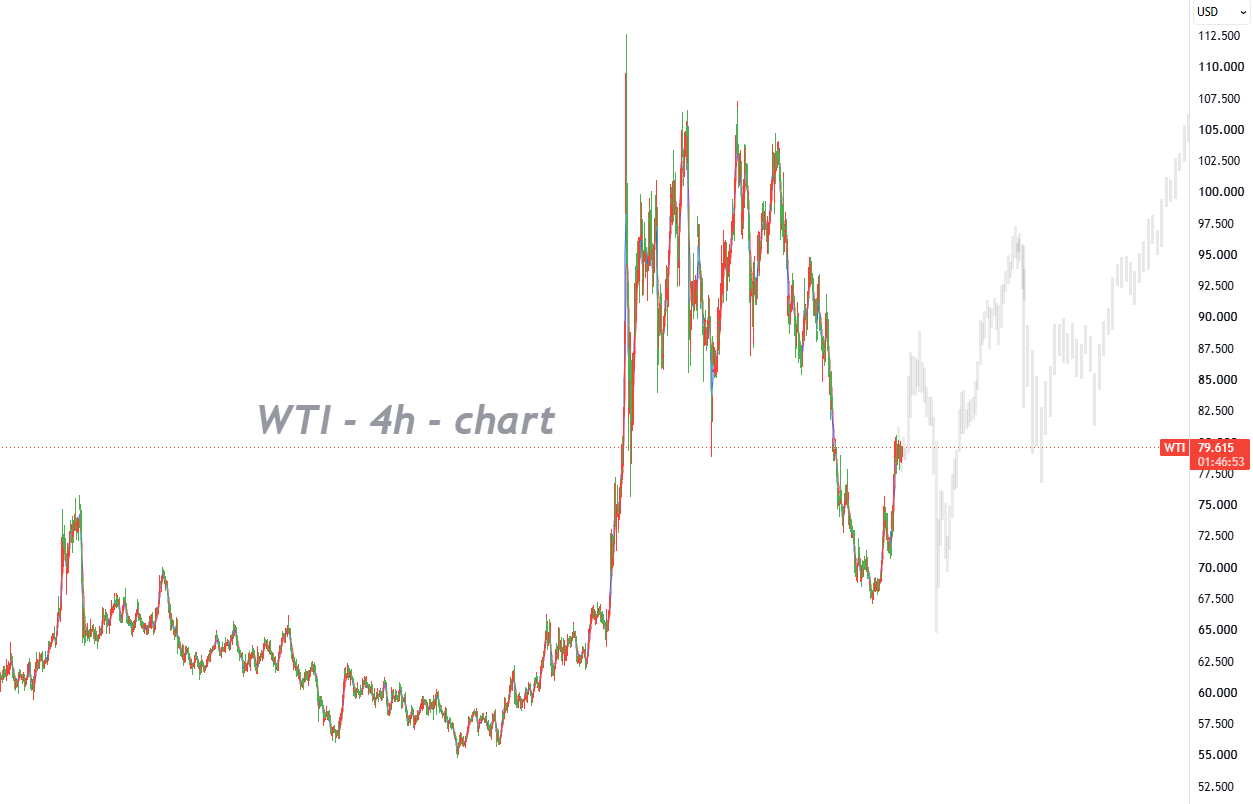
      As tensions in the Middle East shift from the risk of a full-scale conflict to localized confrontations, the extreme geopolitical risk premium embedded in crude oil prices is gradually fading. However, underlying supply-demand fundamentals remain broadly supportive. With OPEC+ continuing to actively manage prices, global demand showing resilience, and geopolitical tail risks still lingering, WTI crude is expected to trade within a wide range during the second half of the year, facing resistance at higher levels while finding solid support on dips. The medium-term price trend is likely to remain upward, with WTI expected to hold above $85.00 per barrel.

      Buy WTI
      EXP
      Trading

      79.697

      ENTRY

      95.800

      TGT

      63.800

      SL

      81.733 +2.866 +3.63%

      0

      Point

      Flat

      63.800

      SL

      CLOSING

      79.697

      ENTRY

      95.800

      TGT
      Fundamentals

      The global crude oil market experienced significant volatility during the first half of the year, largely driven by geopolitical developments. As tensions in the Middle East escalated, fears of a disruption to shipping through the Strait of Hormuz pushed international crude prices sharply higher, briefly approaching $120 per barrel. However, as diplomatic efforts intensified and major economies worked to contain the conflict, concerns over severe supply disruptions eased considerably, triggering a rapid correction in oil prices.
      Although tensions around the Strait of Hormuz have resurfaced recently, market reactions have become noticeably more measured. Investors increasingly recognize that the probability of a complete closure of the world's most critical energy shipping route remains relatively low. As a result, the market's pricing mechanism is shifting from extreme geopolitical scenarios toward a more balanced assessment of geopolitical tail risks.
      Meanwhile, political intervention has once again become an important market driver. The U.S. government remains highly sensitive to the impact of energy prices on domestic inflation and economic growth, leaving open the possibility of measures such as strategic petroleum reserve releases or diplomatic initiatives to prevent excessive price spikes. At the same time, OPEC+ continues to manage supply flexibly in an effort to stabilize the market, underscoring its commitment to maintaining price stability.
      On the demand side, although global economic growth has moderated, the U.S. economy remains relatively resilient while energy consumption across Asia continues to provide solid support. The International Energy Agency (IEA) still expects global oil demand to expand further. Although the market is not facing an outright supply shortage, relatively low inventory levels should continue to limit the downside for crude prices.
      Overall, the key drivers of the oil market in the second half of the year are likely to be the interaction between geopolitical tail risks, government intervention, and supply-demand rebalancing. Against this backdrop, oil prices are unlikely to replicate the sharp one-way rally seen during the first half of the year, but they also appear to lack the fundamental conditions for a sustained bearish trend.
      Geopolitical Risk Premium Returns to More Rational Levels, Oil Prices Likely to Maintain a Constructive Trading Bias in H2_1

      Technical Analysis

      From a longer-term perspective, WTI crude has stabilized following its sharp correction, while the medium- to long-term uptrend remains intact. On the weekly chart, prices continue to trade above the major moving averages, and the long-term ascending trendline remains unbroken, suggesting that the market is still undergoing a healthy consolidation within a broader bullish cycle.
      On the daily chart, the area below $70.00 has gradually emerged as an important medium-term support zone. Over recent sessions, repeated pullbacks toward this region have attracted strong buying interest, indicating that investors are gradually establishing a new value base. Meanwhile, the 20-day and 50-day moving averages have begun to slope higher, signaling that the medium-term bullish structure is rebuilding.
      Momentum indicators also support a constructive outlook. The Relative Strength Index (RSI) is currently holding around the neutral 50 level, suggesting that market sentiment has normalized after previously reaching overly bullish conditions, while remaining comfortably above bearish territory. Meanwhile, the MACD has started to converge, and a renewed bullish crossover would likely signal the beginning of another upward leg.
      On the upside, the $90.00-$92.00 area remains the key short-term resistance zone. A decisive breakout above this range could pave the way for a move toward $95.00-$100.00, with the possibility of retesting this year's highs. On the downside, $70.00 and $64.00 represent the key risk-management levels. As long as these support zones remain intact, the medium- to long-term bullish outlook is expected to remain unchanged.
      Overall, WTI crude is likely to enter a phase of broad but constructive consolidation during the second half of the year. With geopolitical risks still present, global inventories remaining relatively tight, and OPEC+ continuing its active price management strategy, the market's price floor is expected to gradually rise. WTI is projected to trade within an $85.00-$100.00 range over the medium term and maintain a gradual upward bias in the coming months.

      Trading Recommendation

      Direction: Buy
      Entry: 78.50
      Target: 95.80
      Stop Loss: 63.80
      Valid Until: August 15, 2026, 23:55
      Support: 76.00, 74.82, 72.54
      Resistance: 80.57, 85.53, 89.68
      Risk Warnings and Investment Disclaimers
      You understand and acknowledge that there is a high degree of risk involved in trading with strategies. Following any strategies or investment methodologies is the potential for loss. The content on the site is being provided by our contributors and analysts for information purposes only. You alone are solely responsible for determining whether any trading assets, or securities, or strategy, or any other product is suitable for you based on your investment objectives and financial situation.

      Quick Access to 7x24

      Quick Access to More Editor-selected Real-time News

      Exclusive video for free

      FastBull project team is dedicated to create exclusive videos

      Real-time Quotes

      View more faster market quotes

      More comprehensive macro data and economic indicators

      Members have access to entire historical data, guests can only view the last 4 years

      Member-only Database

      Comprehensive forex, commodity, and equity market data

      Eva Chen

      Analysts

      Master of Economics, 8 years in the financial industry, CFA holder, joined HSBC (Hong Kong) Bank in 2013 after graduating from the University of California, USA in the Investment Research and Markets Department. With years of financial market experience and trading experience, having provided excellent investment advice to many brokerages, entity derivatives importers and clients in Greater China.

      Rank

      4

      Articless

      2673

      Win Rate

      60.51%

      P/L Ratio

      0.67

      Focus on

      XAUUSD, WTI, GBPUSD

      Related Analysis

      Political Optimism Fades as Markets Refocus on the Bank of England's Policy Outlook

      Trading

      Political Optimism Fades as Markets Refocus on the Bank of England's Policy Outlook

      Trading

      The Current Rally in Oil Prices May Be Merely a Technical Rebound, with Downside Risks Remaining Once the Upswing Ends

      Trading

      The Current Rally in Oil Prices May Be Merely a Technical Rebound, with Downside Risks Remaining Once the Upswing Ends

      Trading

      BoC Holds Rates Steady for Sixth Consecutive Meeting, Improving Economic Outlook May Continue to Support CAD

      Trading
      FastBull
      English
      English
      العربية
      繁體中文
      简体中文
      Bahasa Melayu
      Bahasa Indonesia
      ภาษาไทย
      Tiếng Việt
      Economic Calendar 7x24 Quotes Video Analysis Data Warehouse Pro AI Signal News